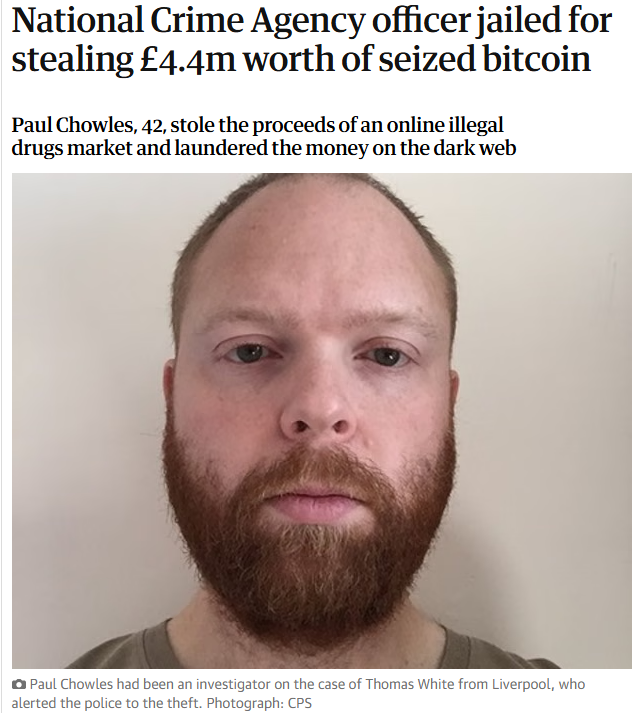
 Paul Chowles, 42, stole the proceeds of an online illegal drugs market and laundered the money on the dark web
Definitely a great AML typology for MLROs' training kit and of course a useful Know Your Employee one as well. I would love to hear from current law enforcement officers and the many ex law enforcement officers in the network on their thoughts on this case. A National Crime Agency (NCA) officer has been jailed for stealing £4.4m worth of bitcoin seized during a joint operation with the US Federal Bureau of Investigation (FBI), after the criminal he was investigating told the police it was missing. Paul Chowles thought he had got away with the crime for five years, prosecutors said, after laundering the money on the dark web and spending £613,000, mostly on day-to-day expenses. The 42-year-old had been working as an investigator on the case of Thomas White from Liverpool, who ran an online black market for illegal drugs, known as Silk Road 2.0, launched a month after a website of the same name was shut down in 2013 by the FBI. It was White, while under investigation, who noticed someone had taken 50 bitcoin of the 97 he had, and told police it had to be someone inside the NCA because they had the private keys for his cryptocurrency wallet. Merseyside police, which had responsibility for managing White in the local area following his release on licence in early 2022, discussed the theft with the NCA, in meetings that Chowles attended. During the investigation, officers discovered Chowles had stolen the money between 6 and 7 May 2017, two years after the White investigation was over, and in the following five years had been spending it in supermarkets and hardware stores and on fuel and meals, with investigators uncovering hundreds of debit card transactions. What are some of the lessons from this case? Generally, the case of the NCA officer jailed for stealing seized bitcoin offers sobering lessons for Money Laundering Reporting Officers (MLROs) and law enforcement agencies. It underscores the critical threat posed by insider abuse and the importance of knowing your employees—especially those entrusted with sensitive financial or digital assets. More specifically, here are 5 Key Lessons for MLROs and Law Enforcement. Key Lessons for MLROs and Law Enforcement 1. Insider Threats Are Real and Costly Even trusted officers can exploit access for personal gain. Chowles used his position to divert seized Bitcoin, bypassing internal controls. Insider threats are harder to detect than external ones because they exploit legitimate access. 2. Know Your Employee (KYE) Is as Crucial as KYC Background checks, ongoing vetting, and behavioral monitoring are essential. Chowles had no prior criminal record, but his misuse of crypto tools went unnoticed for years. Agencies must implement continuous risk assessments for staff in sensitive roles. 3. Weak Internal Controls Enable Exploitation Chowles used mixing services to obscure transactions—a red flag for MLROs. Lack of multi-signature wallets, audit trails, and real-time monitoring allowed the theft to go undetected. Agencies must adopt blockchain analytics tools and segregation of duties. 4. Training in Crypto Forensics Is Vital Law enforcement and MLROs must understand crypto mechanics, including wallets, mixers, and blockchain tracing. Chowles exploited gaps in institutional knowledge to cover his tracks. Regular training and collaboration with tech experts can close these gaps. 5. Reputation and Public Trust Are at Stake This case damages the credibility of the NCA and raises doubts about asset integrity. MLROs must ensure that seized assets are handled transparently and securely. Agencies should publish audit results and enforce accountability to rebuild trust. What are some of the strategic takeaways from this case? 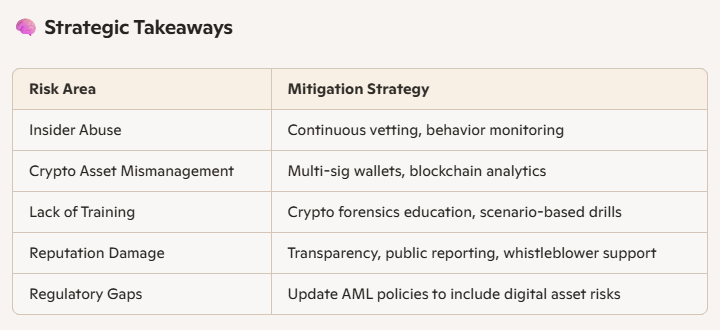 Sources:
0 Comments
Money laundering network run by Russian millionaires and linked to Kinahan gang is exposed5/12/2024 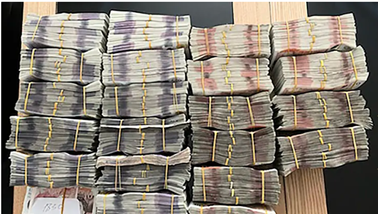 Thank you to our money laundering typology guest contributor who is a senior AFC professional working in Ireland on international financial crime matters. This person freely gives time to source interesting typologies and analyses them for our visitors. Contact us if you would like to do likewise, whether anonymous or credited.
Money laundering network run by Russian millionaires and linked to Kinahan gang is exposed
Summary i. A sophisticated money laundering network operated by Russian millionaires was dismantled in a global law enforcement operation. The network was closely linked to the Kinahan crime cartel, a notorious organized crime group, and facilitated laundering billions of euros in illicit funds. ii. The network's operations centered around two entities, Smart and TGR, which provided services to exchange physical cash for cryptocurrency. This allowed criminals to obscure the origins of the funds effectively, bypassing traditional financial systems and anti-money laundering controls. iii. The laundering operation had a vast international footprint, making it one of the most complex cases tackled in recent years. The involvement of high-net-worth individuals and cross-border connections highlighted the challenges in combating such networks. iv. The coordinated efforts led to 84 arrests and the seizure of £20 million (€24 million) in assets in the UK alone. Authorities hailed it as the National Crime Agency's largest money laundering operation of the past decade. v. The case underscores the evolving techniques criminals use, particularly leveraging cryptocurrencies to bypass scrutiny. It also demonstrates the importance of international collaboration in targeting transnational financial crimes. What’s interesting i. The most notable and interesting aspects for AML professionals from this article include:
ii. This case is a stark reminder of the need for constant adaptation, training, and the adoption of advanced technologies to stay ahead of evolving criminal methodologies. Source: https://www.breakingnews.ie/ireland/money-laundering-network-run-by-russian-millionares-and-linked-to-kinahan-gang-is-exposed-1704190.html 
1. What Happened? It seems that the Criminal Assets Bureau (CAB) is facing a significant challenge in accessing €345 million in Bitcoin seized from Crumlin drug dealer Clifton Collins. The Bitcoin, originally valued at €53 million when seized in 2019, is locked away in 12 digital wallets, with the keys to access them reportedly missing. Collins created 12 wallets for storing the bitcoin and recorded the codes, or digital keys, for each in a document. Collins decided it would be safer to disperse his growing fortune across multiple virtual wallets that hold the cryptocurrency. The Bitcoin was uncovered by the Garda after an operation targeting Collins (in 2019) when it was valued at €53 million. Garda has effectively been sitting on the asset, hoping advances in technology will lead to it being unlocked, it has soared in value to €345 million. Collins – a 53-year-old former beekeeper – grew cannabis crops in rented houses and sold the harvested drug to criminals, including in his native Crumlin. He was apprehended in 2017 after a cannabis growing operation was discovered by chance after years of operating under the radar. Gardaí on a routine patrol spotted a car parked at Military Road near Sally Gap in Co Wicklow in the early hours of the morning and went to check on it. Cannabis herb valued at €2,000 was found in the car, driven by Collins. A subsequent investigation discovered he had been using three rented houses – in Galway, Meath and Longford – to grow cannabis. In the property in Galway, gardaí discovered a crop valued at €400,000 and Collins was later jailed for five years. Eventually the Irish High Court ruled that the Bitcoin was derived from criminal activity. While Collins had handed over some Bitcoin and a code to a portion of his stash, the bulk remains inaccessible due to the lost key, which was hidden in a fishing rod that has since gone missing. Collins invested some of the proceeds of his drugs business in bitcoin, when it was worth only a fraction of its current value, in 2011 and 2012. As the virtual currency increased in value, Collins decided it would be safer to disperse his growing fortune across multiple virtual wallets that hold the cryptocurrency. The keys for the 12 wallets were written on documents and then hidden in a fishing rod case at one of his rented properties, in Co Galway. In interviews with gardaí he claimed he never saw the case again after a break-in at his home. However, a clear-out of the property after his arrest may also have resulted in the loss of the document. In late 2020, Collins surrendered assets worth €1.2 million to the State as they were the proceeds of crime. They included €1 million in bitcoin, which he had the key codes for, as well as a two-seater Gyro aircraft, a camper van and a fishing boat. Despite the value of the Bitcoin skyrocketing, CAB is hopeful that advances in technology will eventually allow them to unlock the wallets. In the meantime, they have liquidated other assets and sold accessible Bitcoin to benefit the state. Collins remains a significant case for the CAB, marking him as their largest financial loss to date. The outcome of this situation will depend on future technological developments or the recovery of the missing key. Pursuing Bitcoin as the Proceeds of Crime is not new The Chief Bureau Officer of CAB informed Irish media way back in October 2021 that CAB is targeting the seizure of cryptocurrencies, however, the value of cryptoassets can be difficult to realise. Back then Detective Chief Superintendent Michael Gubbins said cryptocurrency plays a part in some of the assets that CAB has seized and while there is a substantial value to the cryptocurrency, "we just don't have the keys to get that". 2. What’s interesting?
Source:
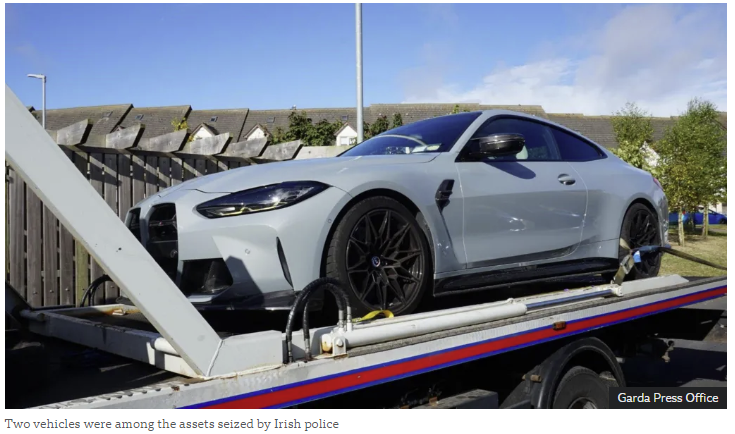
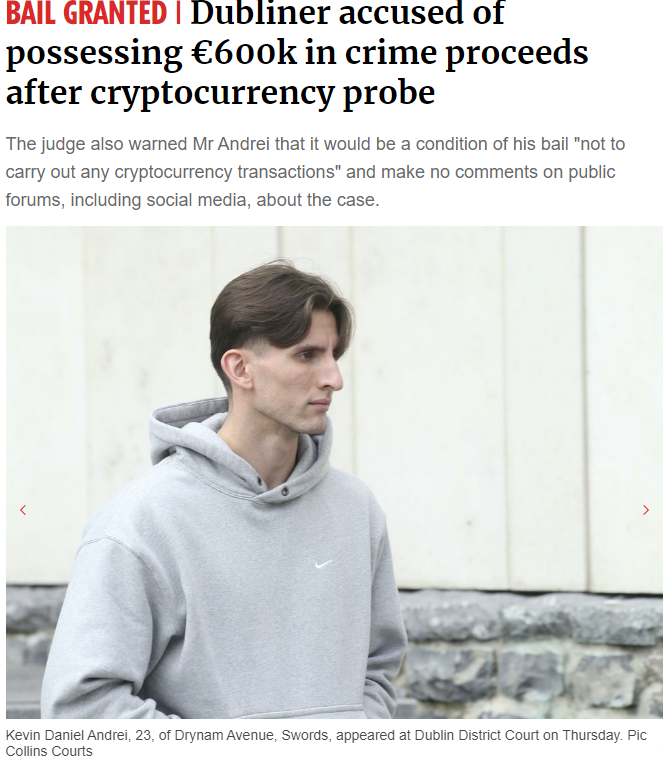 Man charged over €6.5m cryptocurrency seizure in Dublin [August 8, 2024] 1. Summary
The judge also warned Mr Andrei that it would be a condition of his bail "not to carry out any cryptocurrency transactions" and make no comments on public forums, including social media, about the case. 2. What’s interesting
 Sources:
 Written by a www.MoneyLaundering.ie Guest Contributor Subscribe to our news service at HERE 1. Summary
2. What’s interesting
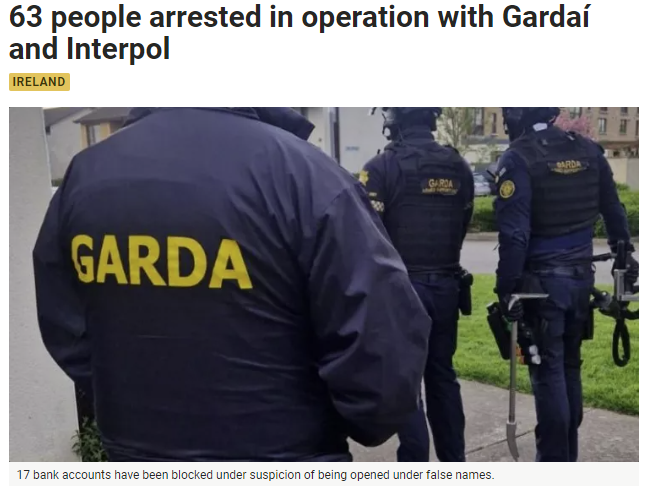
Source https://www.breakingnews.ie/ireland/63-people-arrested-in-operation-with-gardai-and-interpol-1650689.html Subscribe to our news service at HERE Mark Scott was convicted in November 2019 of laundering a total of almost $400m in his role within One Coin pyramid scheme run by notorious 'Cryto Queen' Ruja Ignatova.
Subscribe to our news service at HERE Interesting #financialcrime typology for training purposes around 'easy money to be had' and the corruption of a younger 'technically savvy' generation.
In this case, Adam Gray, just 20 years old has been charged with 21 counts of unlawful use of a computer and attempted theft following an alleged #cryptocurrency fraud. Readers might recall that a few years ago Conor Freeman (21) was jailed for role in $2 million cryptocurrency theft identified by US Homeland Security as part of online group. Freeman, jailed in Ireland, pleaded guilty to knowingly engaging in the possession of the proceeds of crime — namely 142.75682712 Bitcoin. Today (01 July 2023) that amount of bitcoin would be worth a hefty $4.35mn. Not often is there media about dishonestly operating a computer “with the intention of making gain for yourself or another or causing loss to another”. There is clearly more to the facts of this story than is currently in the public domain. Mr Freeman was also charged with three counts of dishonestly operating a computer to make a gain. Adam Gray, just 20 years old has been charged with 21 counts of unlawful use of a computer and attempted theft following an alleged cryptocurrency fraud. It is alleged that at a place unknown within the Ireland the accused dishonestly operated a computer, or caused it to be operated “with the intention of making gain for yourself or another or causing loss to another”. Mr. Gray is also charged with five counts of attempted theft from different people, at locations in Dublin. The attempted theft charges related to a total of €1,249 while the amount of money alleged to have gone through the account was €8,136, the court heard. Conor Freeman case (November 2020) This is a very interesting case. Freeman was jailed in November 2020. In addition to pleading guilty to knowingly engaging in the possession of the proceeds of crime — namely 142.75682712 Bitcoin, he also pleaded guilty to stealing $100,000 in cryptocurrency from Darran Marble on May 15th 2018, stealing cryptocurrencies with an approximate value of $1,921,335, from Seth Sharpiro on May 16th, 2018, and stealing cryptocurrencies with an approximate value of $167,622.22 from Micheal Templeman on May 18th, 2018. He also entered guilty pleas to three counts of dishonestly operating a computer to make a gain on dates between May 15th and May 18th, 2018. He has no previous convictions.
Adam Gray links:
Conor Freeman link
|
AuthorOn this page you will find a selection of links to articles useful for AFC training. Archives
September 2025
Categories
All
|
 RSS Feed