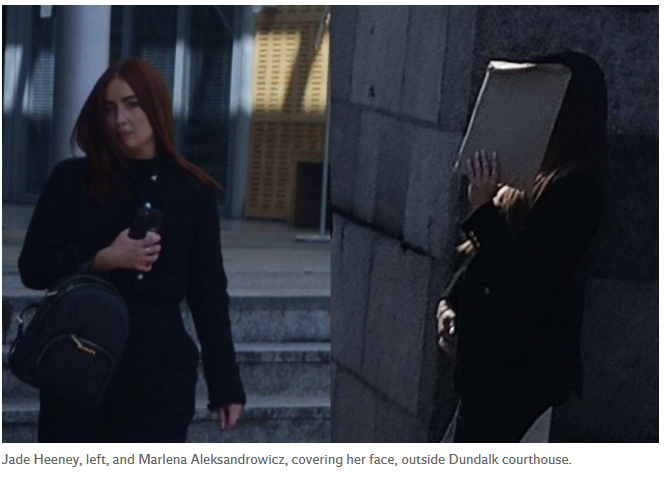
The defendants were described as at the lower scale of a money laundering enterprise for the Boylan Organised Crime Group. None of them profited from it. They had no previous convictions. There was a strong possibility of custodial sentences, the judge continued. He was not saying that will be the outcome. He would consider the submissions. It was a “finely balanced case”. Some insight has been given to the operation of one of the gangs involved in the Drogheda Drugs Feud during a sentence hearing for three women who pleaded guilty to money laundering. Annie Julia Smith (28), Jade Heeney (27) and Marlena Aleksandrowicz (29) appeared before Dundalk Circuit Court and were remanded on continuing bail to July 30 for finalisation of the case with a warning from Judge Dara Hayes that there is “a strong possibility of custodial sentences”. The defendants were described as at the lower scale of a money laundering enterprise for the Boylan Organised Crime Group. None of them profited from it. They had no previous convictions. Keith Boylan was named in court as the alleged head of the Boylan OCG and his brother Josh as the alleged second in command. Jade Heeney is the former partner of Keith Boylan, while Annie Julia Smith is the former partner of Josh Boylan. Gda John Walsh testified that Keith Boylan is “identified as the head” of the crime group and Josh Boylan “classed as second in command”. Ms Heeney, Castlemanor, Ballymakenny, Drogheda; Ms Smith, Candy Lodge, Stamullen Road, Gormanston and Marlena Aleksandrowicz, Bridgefield Northwood, Santry, Dublin 9 Cedar Place, Swords; each admitted one count of money laundering through their respective Revolut accounts which they allowed the gang to use. Gda Walsh gave evidence that the Boylan OCG was one of two factions in the “so-called Drogheda Feud”. As part of an investigation into this gang’s activities a large amount of bank and other accounts were probed and each of the three accused were identified as money laundering the proceeds on behalf of the OCG. Between July 10, 2020 and February 27, 2021, €16,348 went into Marlena Aleksandrowicz’s Revolut account from associates of the OCG and €14,950 was withdrawn. She was a friend of Hannah O’Connor, Keith Boylan’s partner, and did this as a favour to her. Following her arrest by arrangement on September 25, 2023, she told Gardaí that she was afraid to say “no”. "Hannah asked me. I didn’t know her boyfriend.” Gda Walsh agreed with defence counsel that Ms Aleksandrowicz was “out of her depth”. Barrister Donough McDonough, instructed by solicitor James Allen, said that she accepted her actions were reckless. She regretted this which had a toll on her and was a constant source of worry. Born in Poland and an only child, the defendant grew up in Swords. References and a letter of apology were available. Ms Aleksandrowicz and her partner were looking forward to the birth of their child in October. Gda Walsh said that between December 20, 2020 and January 31, 2021, €13,033 was transferred by members of the OCG to Jade Heeney’s Revolut account and €12,551.37 withdrawn. For approximately four years she had been the partner of Keith Boylan. The relationship had ended by the time of this offending. She had been given €1,000 to put into the account after being directed to download the app and to hand over the card to a person unknown to her. "I just did it. I wasn’t thinking. I didn’t see the transactions in or out. I shouldn’t have given the card. I was told to,” she told investigators following her arrest on May 26, 2023. Barrister Ronan O’Carroll, instructed by solicitor James Allen, said that Ms Heeney was still suffering from the effects of the relationship which she ended. She was under pressure and duress to do this offending. A fully qualified hair stylist working in Dundalk, she too wrote a letter of apology and had references. The court heard that between June 17, 2020 and June 3, 2021, associates of the OCG put €8,967.50 into Annie Julia Smith’s Revolut account and withdrew €5,080. She was the former partner of Josh Boylan between 2018 and December 2020. The relationship ended on bad terms. Ms Smith was arrested on September 6, 2023 by arrangement. Barrister Stephen Faulkner, instructed by solicitor Eleanor Kelly, said that she outlined in a letter her shame and embarrassment. Her offending couldn’t be excused but she was afraid to refuse. Judge Hayes said that the three defendants were at the “lowest rung” but it was to the benefit of a serious criminal organisation which required the assistance of people to launder their unlawful gains. There was a strong possibility of custodial sentences, the judge continued. He was not saying that will be the outcome. He would consider the submissions. It was a “finely balanced case”. The matter was adjourned to July 30. Source: https://www.independent.ie/regionals/louth/news/three-women-admit-money-laundering-for-louth-organised-crime-group/a1495082571.html
0 Comments

Thousands of teenagers in Ireland have been targeted by one of the world’s most violent cyber crime gangs, we can reveal.
A special investigation by The Irish Sun today tells how young people — aged between 17 and 22 — have been used by the Black Axe crime gang as part of their efforts to launder €84million through Irish banks. Those in the sights of the mob include people with addiction issues, individuals who are homeless and those who come from broken homes. But others include those who have to pay off drug debts, the children of millionaires and top students. They have blackmailed kids to act as money mules after obtaining intimate images of their targets. The online criminals — classified as ‘master manipulators’ by Gardai — use the “social engineering” tactic by sending a message on a social media app offering their target the chance to earn €500. Source: https://www.thesun.ie/news/15306774/cyber-crime-gang-thugs-money-garda-arrest/ 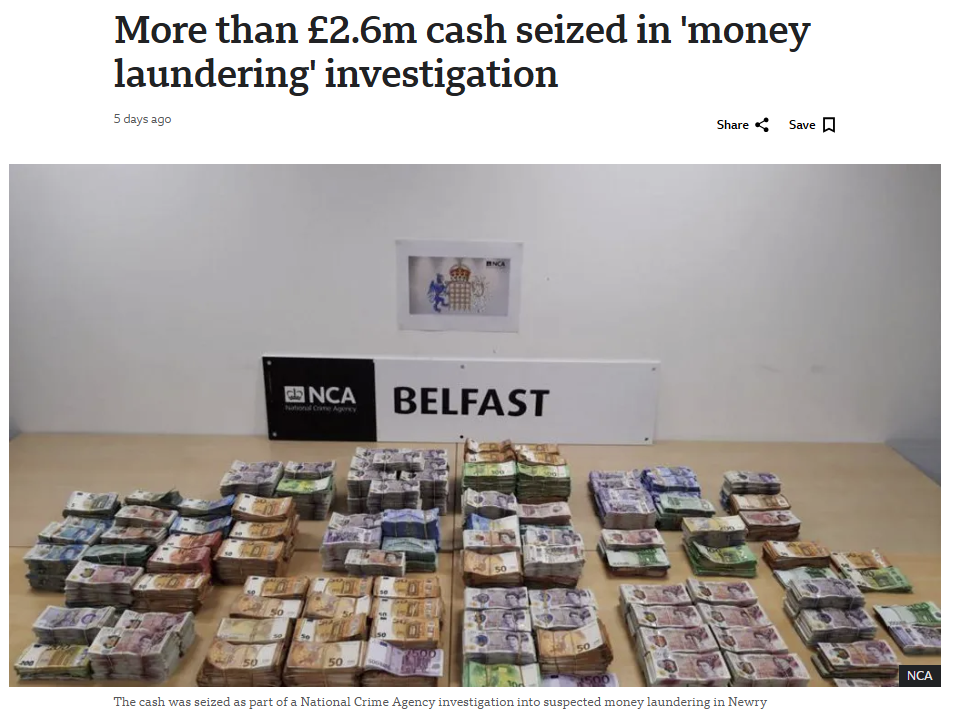
More than £2.6m of cash has been seized as part of a National Crime Agency (NCA) investigation into suspected money laundering in Newry. The NCA said after searches of two businesses and two residential properties, a total of £882,695 and €1.055m (£902,000) was recovered by its officers as suspected criminal funds. It said a further £692,140 and €223,490 (£191,028) had previously been seized by Police Service of Northern Ireland officers, working in partnership with the NCA, "in earlier disruptions". A 26-year-old man from Newry, who was arrested on 19 June, has been bailed as the investigation continues. Source: https://www.bbc.com/news/articles/cy7n0ylk78ko
 This is not a typology but a relevant piece of news about the fight against financial crime pursued by the Central Bank of Ireland.
See CompliReg at https://complireg.com/blogs--insights/cohort-1-of-central-bank-of-irelands-innovation-sandbox-programme-combatting-financial-crime for detailed blog Seven participants of the Central Bank of Ireland’s Innovation Sandbox Programme on ‘Combatting Financial Crime’ are: 1) AMLYZE is building an AML/CFT information-sharing framework that will use structured taxonomies and synthetic data to simplify detecting and preventing fraudulent activities. 2) Expleo Group has developed an anti-SMS fraud solution which installs on mobile phones to combat SMS fraud. 3) Forward Emphasis and Pasabi’s joint innovation will develop and test a Motor Insurance Application Fraud Analytics solution, leveraging AI-driven behavioural analytics, machine learning, and pattern recognition to detect fraud in the pre-sales process. 4) Roseman Labs enables secure, GDPR-compliant collaboration and analysis on sensitive data for regulated industries. 5) Sedicii (hello Rob Leslie) and PTSB Sedicii has partnered with PTSB to create a secure and private collaboration using zero knowledge proofs to verify names and addresses, in real-time, as part of their customer KYC process, using ESB Networks as the authority for address data in Ireland in full compliance with GDPR and which involves no sharing of personal data. 6) TrustElevate.com offers a privacy-preserving solution for verifying parental responsibility and child age. 7) Vidos.Id is developing digital identity verification solutions to help financial institutions verify digital identity documents and wallet-based credentials. See CompliReg at https://complireg.com/blogs--insights/cohort-1-of-central-bank-of-irelands-innovation-sandbox-programme-combatting-financial-crime for detailed blog
 Thank you to our money laundering typology guest contributor who is a senior AFC professional working in Ireland on international financial crime matters. This person freely gives time to source interesting typologies and analyses them for our visitors. Contact us if you would like to do likewise, whether anonymous or credited.
Trial to go ahead in €355,000 alleged 'romance fraud' case Summary
What’s interesting i. For AML professionals, the following points from this article are particularly notable:
Source: https://www.irishmirror.ie/news/irish-news/trial-go-ahead-romance-fraud-34433615
 Thank you to our money laundering typology guest contributor who is a senior AFC professional working in Ireland on international financial crime matters. This person freely gives time to source interesting typologies and analyses them for our visitors. Contact us if you would like to do likewise, whether anonymous or credited.
Bank kept lending to Lynn years after staff raised alarm about solicitor
Summary
What’s interesting i. The case of Michael Lynn presents several points of interest for AML professionals:
ii. This case is a reminder of the critical role of strong AML and fraud detection systems in protecting financial institutions from high-risk schemes involving trusted professionals. Source: https://extra.ie/2025/01/05/news/irish-news/bank-lending-michael-lynn Money laundering network run by Russian millionaires and linked to Kinahan gang is exposed5/12/2024  Thank you to our money laundering typology guest contributor who is a senior AFC professional working in Ireland on international financial crime matters. This person freely gives time to source interesting typologies and analyses them for our visitors. Contact us if you would like to do likewise, whether anonymous or credited.
Money laundering network run by Russian millionaires and linked to Kinahan gang is exposed
Summary i. A sophisticated money laundering network operated by Russian millionaires was dismantled in a global law enforcement operation. The network was closely linked to the Kinahan crime cartel, a notorious organized crime group, and facilitated laundering billions of euros in illicit funds. ii. The network's operations centered around two entities, Smart and TGR, which provided services to exchange physical cash for cryptocurrency. This allowed criminals to obscure the origins of the funds effectively, bypassing traditional financial systems and anti-money laundering controls. iii. The laundering operation had a vast international footprint, making it one of the most complex cases tackled in recent years. The involvement of high-net-worth individuals and cross-border connections highlighted the challenges in combating such networks. iv. The coordinated efforts led to 84 arrests and the seizure of £20 million (€24 million) in assets in the UK alone. Authorities hailed it as the National Crime Agency's largest money laundering operation of the past decade. v. The case underscores the evolving techniques criminals use, particularly leveraging cryptocurrencies to bypass scrutiny. It also demonstrates the importance of international collaboration in targeting transnational financial crimes. What’s interesting i. The most notable and interesting aspects for AML professionals from this article include:
ii. This case is a stark reminder of the need for constant adaptation, training, and the adoption of advanced technologies to stay ahead of evolving criminal methodologies. Source: https://www.breakingnews.ie/ireland/money-laundering-network-run-by-russian-millionares-and-linked-to-kinahan-gang-is-exposed-1704190.html  Thank you to our money laundering typology guest contributor who is a senior AFC professional working in Ireland on international financial crime matters. This person freely gives time to source interesting typologies and analyses them for our visitors. Contact us if you would like to do likewise, whether anonymous or credited. Subscribe to our news service at HERE Former Ireland hockey player Catriona Carey to face trial on money laundering charges
Summary i. Former Irish hockey player Catriona Carey faces 13 charges, including money laundering, theft, and deception, following an investigation into alleged financial crimes. ii. The charges are connected to a scheme where Carey purportedly offered financial services, falsely claiming to assist individuals in mortgage arrears by securing new loans. iii. Victims reportedly transferred significant sums to Carey’s company but did not receive the promised services, with the funds instead allegedly diverted for personal use. iv. Carey appeared in Kilkenny District Court, where she was formally charged, and bail conditions were set, requiring her to sign weekly at a local Garda station. v. The case has drawn significant attention due to Carey’s profile and the impact on victims, highlighting concerns about financial fraud and enforcement in Ireland. What’s interesting i. The case of Catriona Carey is notable for AML professionals due to several key aspects:
Source: https://www.thejournal.ie/catriona-carey-money-laundering-charges-6562783-Dec2024/ 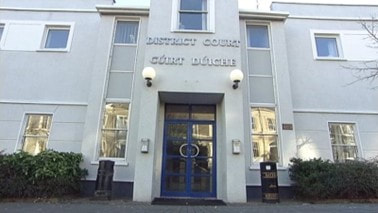 Thank you to our money laundering typology guest contributor who is a senior AFC professional working in Ireland on international financial crime matters. This person freely gives time to source interesting typologies and analyses them for our visitors. Contact us if you would like to do likewise, whether anonymous or credited.
Women charged over money laundering, luxury handbags
Summary i. A 33-year-old woman appeared in Dún Laoghaire District Court, charged with money laundering offenses involving the handling of cash and luxury handbags. ii. The charges stem from an investigation into the alleged laundering of proceeds from criminal activities, where high-value items were used to conceal illicit funds. iii. The court proceedings are part of a broader effort by authorities to combat money laundering and the use of luxury goods to disguise the origins of illegal money. What’s interesting i. The most notable or interesting points for AML professionals from this article are:
Source: https://www.rte.ie/news/regional/2024/1127/1483364-women-charged-over-money-laundering-luxury-handbags/ Thank you to our money laundering typology guest contributor who is a senior AFC professional working in Ireland on international financial crime matters. This person freely gives time to source interesting typologies and analyses them for our visitors. Contact us if you would like to do likewise, whether anonymous or credited.  Subscribe to our news service at HERE Man stands trial in Tralee accused of money laundering over €90,000 1. Summary
i. This case serves as a reminder for financial crime professionals to remain vigilant about emerging fraud typologies and maintain strong frameworks for detecting and reporting suspicious activities. ii. Some key takeaways:
Source: https://www.radiokerry.ie/news/man-stands-trial-in-tralee-accused-of-money-laundering-over-e90000-2-408994
|
AuthorOn this page you will find a selection of links to articles useful for AFC training. Archives
September 2025
Categories
All
|
 RSS Feed