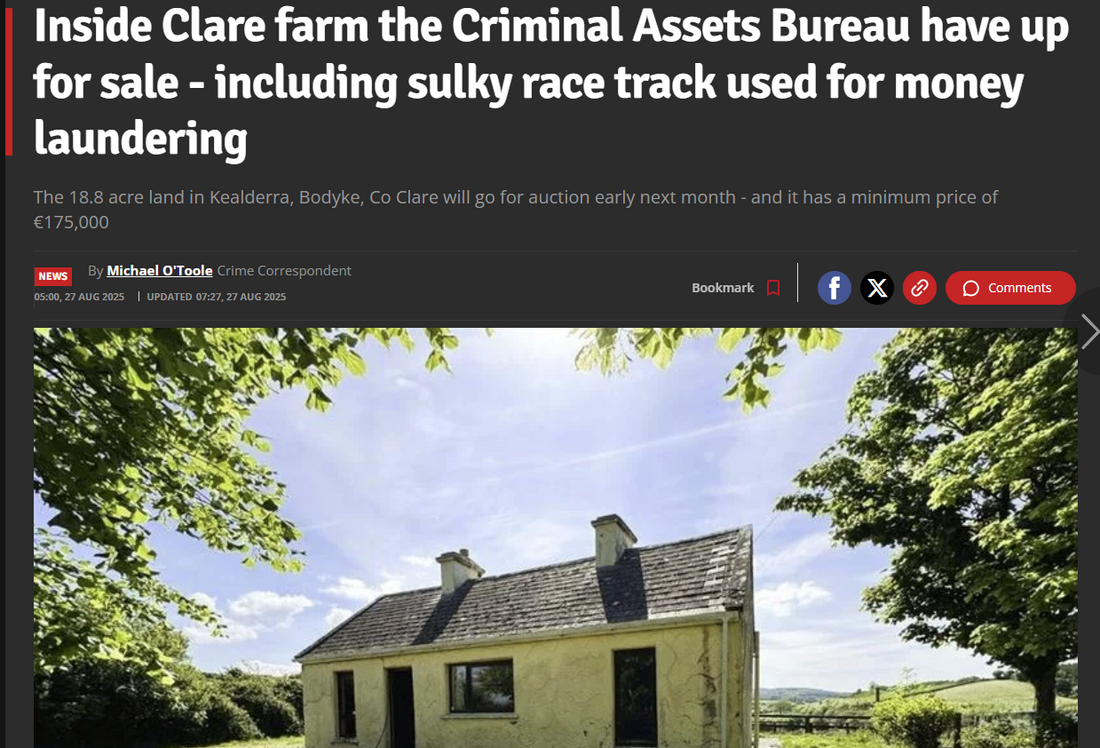
 Inside an Irish Money Laundering Operation: A Case Study
When Gardaí raided a remote farm in County Clare, they didn’t just uncover livestock and machinery—they unearthed a sophisticated money laundering scheme that had quietly converted criminal proceeds into assets that looked, on the surface, perfectly legitimate. This case illustrates a classic Irish money laundering typology, showing how criminals place, layer, and integrate illicit cash within Ireland’s financial and property systems. Placement: Converting Cash into Tangible Assets The operation began with large volumes of cash generated from drug trafficking and organised crime. Instead of depositing the money directly into banks, where suspicious transaction reports (STRs) might be triggered, the criminals purchased agricultural land, machinery, and livestock. By acquiring a functioning farm, they could explain away large cash movements as agricultural income. This is a common Irish adaptation: cash-rich illicit groups investing in rural property or cash-intensive businesses (such as pubs, car washes, or construction firms) to disguise their income sources. Layering: Complex Transfers and False Trails Once the farm was operational, transactions became deliberately complex. Animals were bought and sold across county lines, often with inflated or understated valuations. Equipment was leased through third parties, and funds were moved across multiple Irish bank accounts in amounts just under the €10,000 reporting threshold. The criminals also relied on “money mules”—individuals, often vulnerable or indebted, who allowed their accounts to be used for funneling funds. This layering process created a tangled financial trail, frustrating investigators trying to trace the money back to its illicit origins. Integration: Dirty Money Becomes ‘Clean’ Over time, the scheme succeeded in integrating illicit funds into the mainstream economy. The farm produced legitimate revenue streams: cattle sales, EU agricultural subsidies, and lease agreements. Criminal proceeds were effectively rebranded as farm income. The perpetrators then used these seemingly legitimate profits to invest in vehicles, luxury goods, and even overseas property. By this stage, the money appeared clean—making it extremely difficult to prove its criminal origin without extensive investigation. This case demonstrates several AML red flags relevant to Ireland:
The case was eventually cracked by the Garda National Economic Crime Bureau (GNECB), working in partnership with the Criminal Assets Bureau (CAB). Assets—including the farm, machinery, and livestock—were seized under proceeds of crime legislation. Under the Criminal Justice (Money Laundering & Terrorist Financing) Act 2010, amended in line with EU directives, individuals convicted of laundering can face up to 14 years in prison and unlimited fines. In addition, the Central Bank of Ireland can levy significant administrative sanctions against financial institutions that fail to detect and report suspicious activity. This farm case typifies money laundering typologies in Ireland: criminal cash embedded in rural businesses, layered through complex transactions, and integrated into the economy via legitimate-looking revenue. For compliance officers, solicitors, accountants, and financial institutions, it serves as a reminder that criminal proceeds don’t always appear as stacks of cash in city banks—they may be hiding in plain sight on a quiet farm road in the Irish countryside. Source: https://www.irishmirror.ie/news/irish-news/crime/gallery/inside-clare-farm-criminal-assets-35794821
0 Comments
Your comment will be posted after it is approved.
Leave a Reply. |
AuthorOn this page you will find a selection of links to articles useful for AFC training. Archives
September 2025
Categories
All
|
 RSS Feed